

Modular Lighting Displays: One Structure, Endless Seasonal Possibilities
A lighting display can evolve without being completely replaced. However, this flexibility needs to be considered from the very beginning of a project.
Structures, decorative motifs, accessories, colors and compositions: some elements can remain in place while others change to reflect different seasons, events or uses.
Modular lighting displays are not simply about reusing decorations. They involve designing adaptable installations that can evolve over time while creating fresh visual experiences.
To achieve this, several decisions need to be made in advance: which components will remain permanent, which can be replaced, what configurations are possible, and how storage and reinstallation will be managed.
The goal is simple: refresh the visual experience without starting from scratch every time.
Which Elements of a Lighting Display Can Be Reused or Updated?
Not every component of a decorative installation needs to change at the same pace.
To create a truly modular display, it is important to distinguish between its permanent structure and the elements that can evolve over time.
The main structure can remain in place when it is suited to the location and project requirements. Around this foundation, several components can be modified:
- Decorative motifs, to introduce different visual themes.
- Accessories and decorations, depending on the season or event.
- Colors, to refresh the atmosphere.
- Selected lighting elements, to change the visual effect.
- Additional modules, to adapt the overall composition.
This approach preserves part of the installation while maintaining creative freedom.
The objective is not to make every component interchangeable, but to identify those whose transformation will have the greatest visual impact.
Naturally, the right solution depends on the location and its intended uses. A shopping mall, a public square and an event venue have different requirements.
.jpg?width=1080&height=1350&name=Brisbane-2026---Le-Festival-Brisbane-French-Festival-%C2%A9-ABE-(1).jpg)
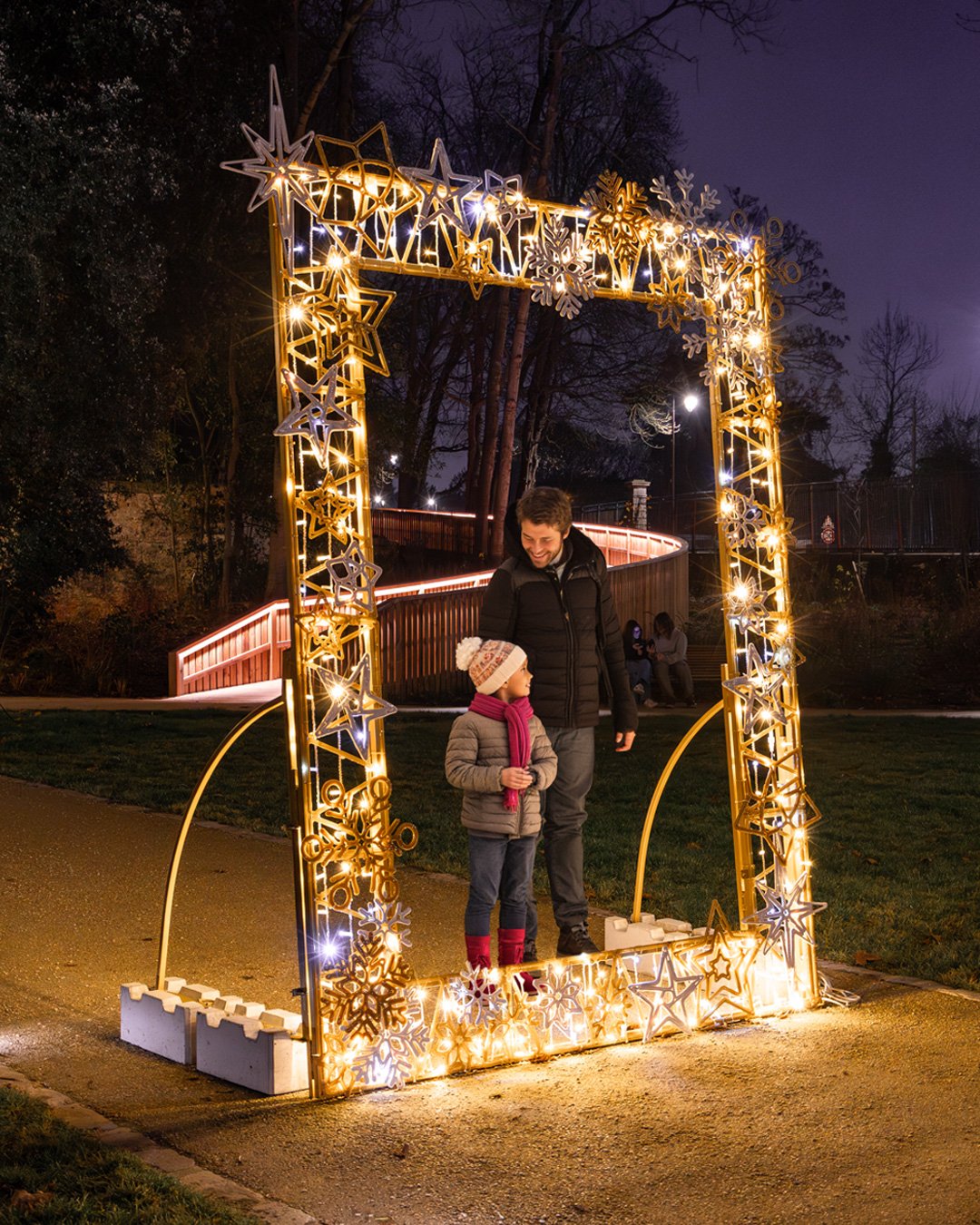
2D illuminated picture frames © Leblanc Illuminations
4 Questions to Ask Before Designing a Modular Display
For a lighting display to remain adaptable, certain decisions must be made before installation.
The challenge is to identify which elements can evolve while ensuring that the overall design remains practical, coherent and visually appealing.
1. Which elements should remain permanent?
The first step is to identify the installation's foundation: its structure, supports, layout and technical components.
These elements should be versatile enough to retain their function even when the decorative theme changes.
The design must also take into account:
- Available dimensions.
- Visitor circulation.
- Installation constraints.
- Safety requirements.
- Visibility from main pedestrian routes.
A well-designed foundation helps maintain consistency between different seasonal decorations while allowing the overall atmosphere to evolve.
2. Which elements can be modified?
Once the main structure has been defined, the next step is to identify which decorative elements can be replaced or repositioned.
Motifs, accessories, coverings and selected decorative components can become the main drivers of visual renewal.
Sometimes, changing just a few highly visible elements is enough to give an installation a completely different appearance.
This combination of permanent and adaptable components allows venues to maintain a recognizable identity while refreshing the visitor experience.
Leblanc Illuminations’ customizable e-deco displays illustrate this approach, with motifs and coverings that allow for the renewal of an installation’s visual identity


2D e-deco Daytime Arch © Leblanc Illuminations
3. What uses should be anticipated?
A modular installation benefits from being designed with several occasions in mind:
- Christmas and the holiday season.
- Spring and summer celebrations.
- Sporting events.
- Retail promotions.
- Local festivals.
- One-off events.
There is no need to anticipate every future display in detail.
The priority is to create a sufficiently flexible installation that can accommodate new ideas and changing requirements.
Leblanc Illuminations’ collections of seasonal decorations offer several ideas for creating atmospheres suited to every time of year.
This forward-thinking approach also prevents a structure from becoming too closely associated with one particular season, making it easier to reuse for future occasions.
4. How Can Changes Between Configurations Be Made Easier?
Modularity must remain practical.
Disassembly, storage, transportation and reinstallation should therefore be considered from the initial design stage.
A well-planned modular system should make it straightforward to modify the installation when required.
Attachment systems, dimensions, the number of components and ease of handling all influence how effectively a display can be adapted.
These four considerations help create an installation that works for its first event while remaining suitable for future seasonal transformations.
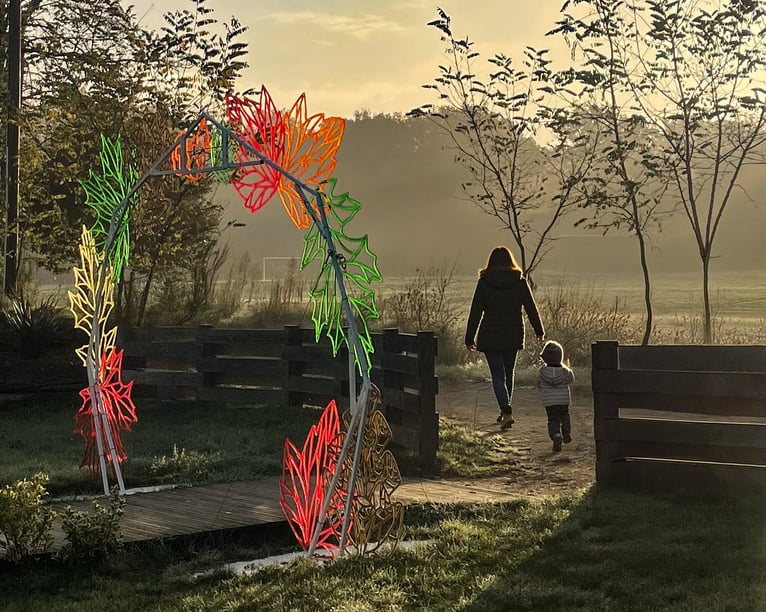
2D e-deco Daytime Arch © Leblanc Illuminations
Modular Lighting Displays in Practice: Examples from Canada
Modularity is more than a design concept. Several projects developed by Leblanc Illuminations Canada demonstrate how decorative installations can evolve to suit different occasions.
One Structure, Different Seasonal Experiences
Modular seating provides a practical example.
Composed of seating blocks and overhead modules, these installations can be configured in different ways depending on a venue's needs.
Available in illuminated or non-illuminated versions and with different finishes, they can also be customized with colorful e-deco motifs made from recycled and recyclable materials.
The structure retains its primary function, while its appearance can change throughout the year.
Using the same foundation, it becomes possible to create:
- A winter or festive atmosphere.
- A spring-inspired composition featuring greenery.
- A colorful summer theme.
- Decorations tailored to a specific event.
Once the installation has been adapted to its location, the creative process can focus on developing new seasonal identities.
The decorative elements evolve, while the main structure continues to serve its original purpose.
For shopping malls and other commercial spaces, this flexibility can help create different visitor experiences without redesigning the entire installation.
Niagara Falls: Decorative Arches That Adapt to Events
Leblanc Illuminations Canada also demonstrated this principle with 2D decorative arches installed at Niagara Falls in connection with the 2026 FIFA World Cup celebrations.
Their design allows the same structure to be combined with interchangeable daytime decorations suited to different events and seasons.
For a major sporting event, the arches can be customized to reflect a particular theme.
Once the event is over, the structure can be adapted with new decorative elements to celebrate autumn or another occasion.
The concept is based on three principles:
- A permanent structure suited to the location.
- Interchangeable decorative elements adapted to the occasion.
- A refreshed visual identity without replacing the entire installation.
Rather than being limited to one event, the structure becomes a versatile foundation for different decorative experiences.
At Niagara Falls, these 2D arches demonstrate how a single installation can accommodate successive seasonal themes.
Together, these Canadian projects illustrate two complementary aspects of modularity: updating an installation's visual identity and designing a structure that can support multiple uses over time.
👉Explore Leblanc Illuminations’ projects around the world.
.jpg?width=1350&height=1080&name=Niagara-Parks-FIFA-World-Cup-2026-%C2%A9-LI-(3).jpg)
2D e-deco illuminated arch © Leblanc Illuminations Canada
Reusing a Structure Doesn't Mean Repeating the Same Display
One concern surrounding reusable decorations is the possibility that visitors will feel they are seeing the same installation year after year.
However, retaining an existing structure does not mean reproducing an identical display.
Modularity allows selected components to remain in use while changing the elements that give an installation its distinctive character.
This approach also reflects Leblanc Illuminations' commitment to developing more responsible decorative solutions, with environmental considerations integrated into product design.
Several techniques can help renew the appearance of an existing display:
- Replace the most visible decorative motifs.
- Introduce a different color palette.
- Rearrange selected modules.
- Add or remove decorative accessories.
- Adjust compatible lighting elements.
- Combine the structure with new decorative features.
These changes can significantly influence how visitors perceive an installation, even when part of its structure remains unchanged.
Lighting, surroundings and the arrangement of decorative elements also contribute to the overall experience.
The challenge is to preserve what works while introducing enough variety to create something new.
Modularity therefore becomes a creative tool, offering venues the flexibility to develop different visual experiences from an existing foundation.
It can also support a more considered approach to decorative installations by encouraging the continued use of suitable components.


e-deco Modular Decor © Leblanc Illuminations Canada
Refresh Your Decorative Installations Without Starting from Scratch
Designing a modular lighting display means taking a longer-term approach to decorative installations.
Instead of creating a display for a single season or event, the structure can become a foundation for multiple celebrations and visual experiences.
Three principles are particularly important:
- Anticipate future uses from the initial design stage.
- Identify permanent and adaptable elements to make future transformations possible.
- Adapt the installation to the seasons, events and specific requirements of the location.
The projects developed by Leblanc Illuminations Canada demonstrate how these principles can work in practice.
Modular seating can change its appearance throughout the year, while decorative arches can accommodate different motifs depending on the occasion.
Every project is unique. The right level of modularity depends on the venue, its technical requirements and its intended uses.
Looking to create a decorative installation that evolves with your seasons and events?
Leblanc Illuminations can help you develop a solution tailored to your space and its different celebrations.
FAQ
What is a modular light display?
A modular lighting display is an installation designed to evolve over time. Its main structure can remain the same, while certain elements—such as patterns, accessories, finishes, or colors—are modified according to the seasons or events.
Why choose an adaptable lighting display?
An adaptable display allows you to refresh the atmosphere of a space without having to start from scratch with an entirely new installation every time. It offers greater flexibility for adapting a display to multiple key events throughout the year.
Which elements of a set can be modified?
It depends on the project, but the elements most often modified are decorative motifs, props, colors, certain add-on modules, or even the overall layout of the design.
Would you like to create an installation that can evolve with the seasons and events?
The potential for evolution must be planned for from the design phase. In particular, you need to identify which elements are permanent, which can be changed, and the various intended uses, while taking into account storage, transportation, and reinstallation.
Share your project with our teams so we can develop a solution tailored to your needs.