

Professional Lighting: What Safety Standards Should You Check?
A successful festive lighting project is about more than choosing decorations and creating a beautiful display. From the earliest design stages, technical requirements and safety considerations play an important role.
Electrical standards, product specifications and installation conditions all influence the choices made throughout a project.
Which safety standards should you consider, and what should you check before moving forward? Here are the key points to help you select suitable lighting solutions and plan your project with confidence.
Planning for Safety from the Design Stage
Every location has its own requirements. A shopping street, public square or shopping centre will not face the same installation challenges.
Before selecting your lighting decorations, consider:
- The environment: indoor or outdoor installation, weather exposure and site characteristics.
- Electrical requirements: available voltage, power requirements and equipment compatibility.
- How the space is used: pedestrian circulation, technical access and operational needs.
- Local regulations: requirements that may vary depending on the country and installation.
These factors help determine which solutions are suitable before the final design is approved.
By considering safety early on, technical requirements become part of the creative process rather than an obstacle during installation.
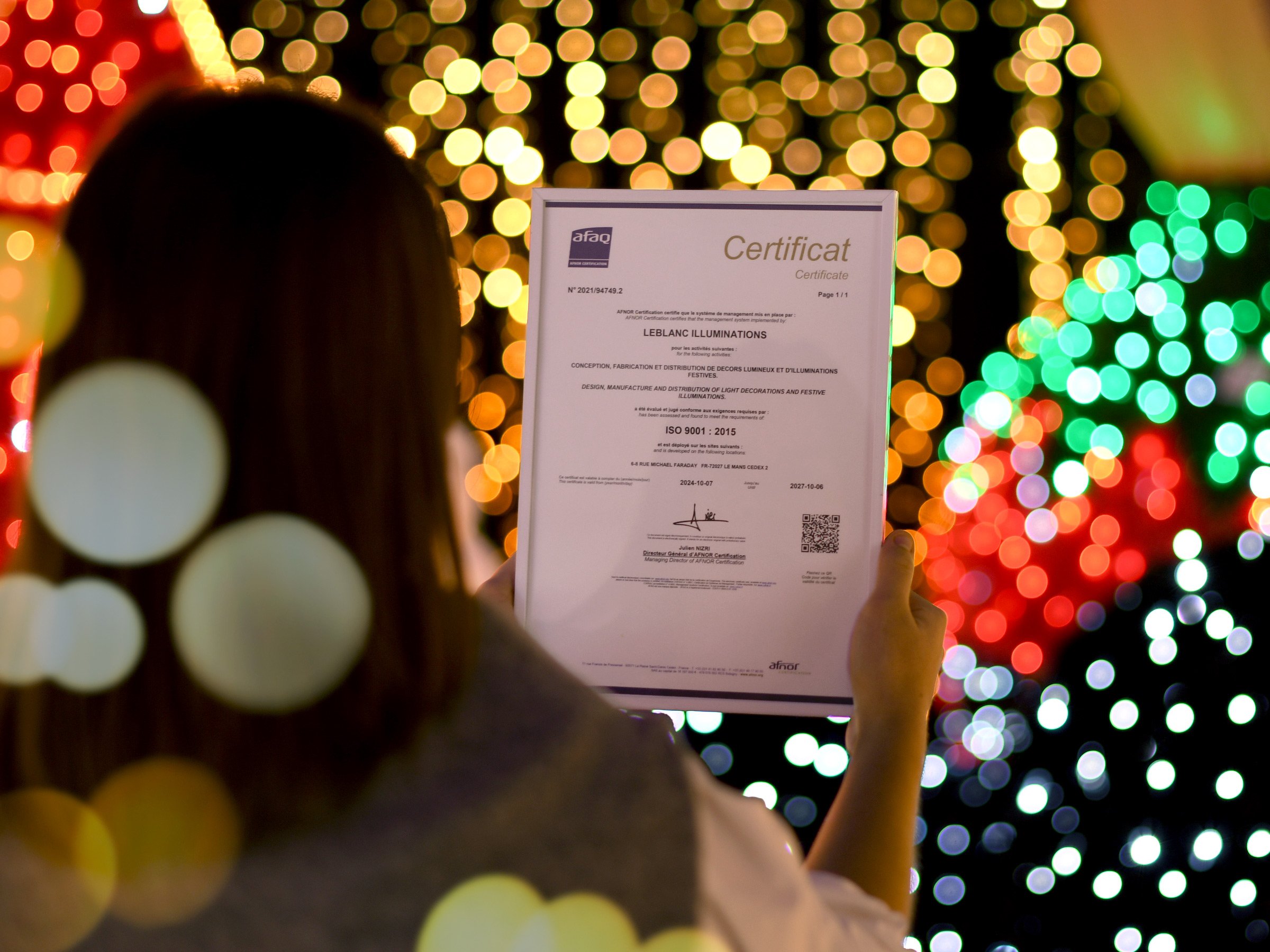
ISO 9001 Certification © Leblanc Illuminations
Understanding Electrical Standards for Professional Festive Lighting
Professional lighting equipment must meet the safety requirements relevant to its design and intended use.
Light strings, rope lights and power supplies do not necessarily follow the same technical standards.
Different Standards for Different Lighting Products
In Europe, several standards address the safety of lighting equipment. The standards referenced by leblanc illuminations include:
- EN 60598-2-20: specific safety requirements for lighting chains.
- EN 60598-2-21: specific requirements for rope lights.
- EN 60598-1: general safety requirements for the luminaires concerned.
- EN 61347-1 and EN 61347-2-13: requirements for certain types of lamp controlgear and LED power supplies.
These standards help assess the safety characteristics of the products concerned.
For project teams, the important point is to identify which requirements apply to the selected equipment rather than assume that one standard covers the entire installation.
CE Marking, Standards, and Testing: What's the Difference?
CE marking indicates that a manufacturer declares a product to meet applicable European requirements. It is not, by itself, independent third-party certification.
Technical standards provide requirements and testing methods. Product testing and quality checks help assess specific characteristics.
At Leblanc Illuminations, the quality process includes independent inspections at the end of production, followed by additional checks when products arrive at the company's facilities in Le Mans, France.
These controls support product quality. However, selecting compliant equipment is only one part of preparing a safe installation.
Product Division © Leblanc Illuminations
Choosing Lighting Equipment for Your Location
Lighting decorations installed inside a shopping centre face different conditions from those displayed on a building façade or along a busy street.
The right choice depends on the environment, the technical specifications and the intended use.
Understanding IP ratings and electrical specifications
An IP (Ingress Protection) rating describes how well an enclosure protects against the entry of solid objects and water.
For outdoor festive lighting, it is an important consideration. The appropriate rating depends on the installation location and the manufacturer's instructions.
Voltage, power requirements and connector compatibility also need to be checked.
For example, Chromex offers lighting products in both 24V and 230V configurations. These require different power arrangements and compatible components.
The right equipment should meet the technical needs of the project while supporting the visual result you want to achieve.
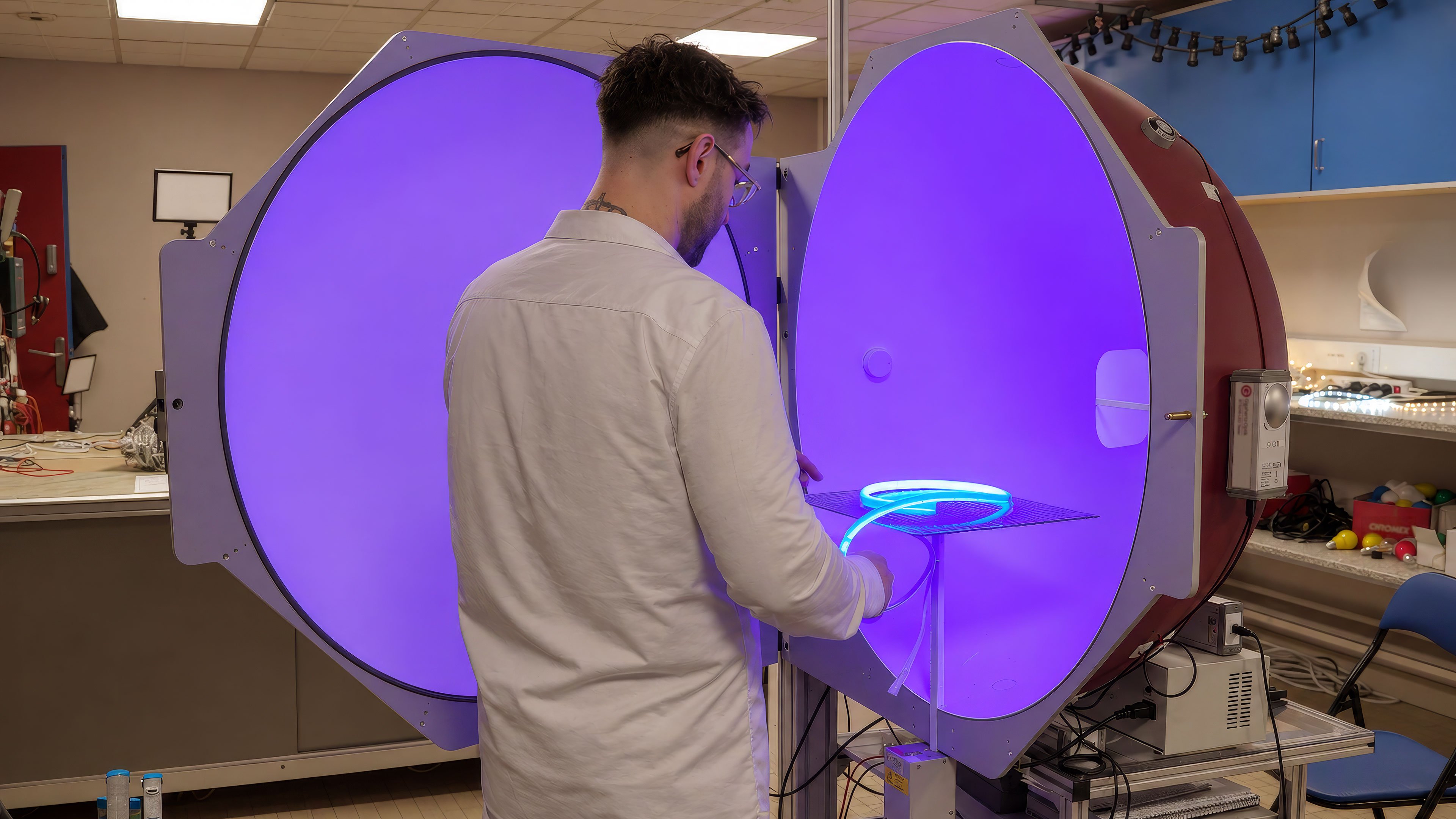
Quality Control Laboratory © Leblanc Illuminations
What Documents Should You Check Before Approving a Project?
Clear technical documentation helps you make informed decisions and coordinate with the professionals involved in installation.
Before confirming your equipment selection, review three essential types of documents:
- Technical data sheets: dimensions, power consumption, voltage and protection ratings.
- Installation instructions: intended use, compatible accessories and necessary precautions.
- Applicable declarations of conformity: information about the regulatory requirements the manufacturer declares the product meets.
For international projects, local requirements must also be considered. Equipment meeting European requirements may still need additional assessment for other markets.
Having the right information from the start helps reduce uncertainty and facilitates communication between project teams and local installation partners.
For practical advice on installation, see our article Installation and Safety at an Event.
Bringing Safety, Creativity and Technical Expertise Together
Technical considerations should support the creative vision of the project, not limit it.
The challenge is to find solutions that respect the site's characteristics while delivering the atmosphere and visual impact expected.
Brussels: Adapting a Lighting Design to Real-World Constraints
In Brussels, Leblanc illuminations worked with its local partner, Pact Solutions, on bespoke illuminated chandeliers for a street near the Grand-Place.
Shortly before installation, the decorations needed to be enlarged by approximately 30%.
The teams adjusted the structures and completed the necessary rewiring while keeping the delivery on schedule.
This project demonstrates how technical expertise and close collaboration can help meet changing project requirements without losing sight of the creative vision.
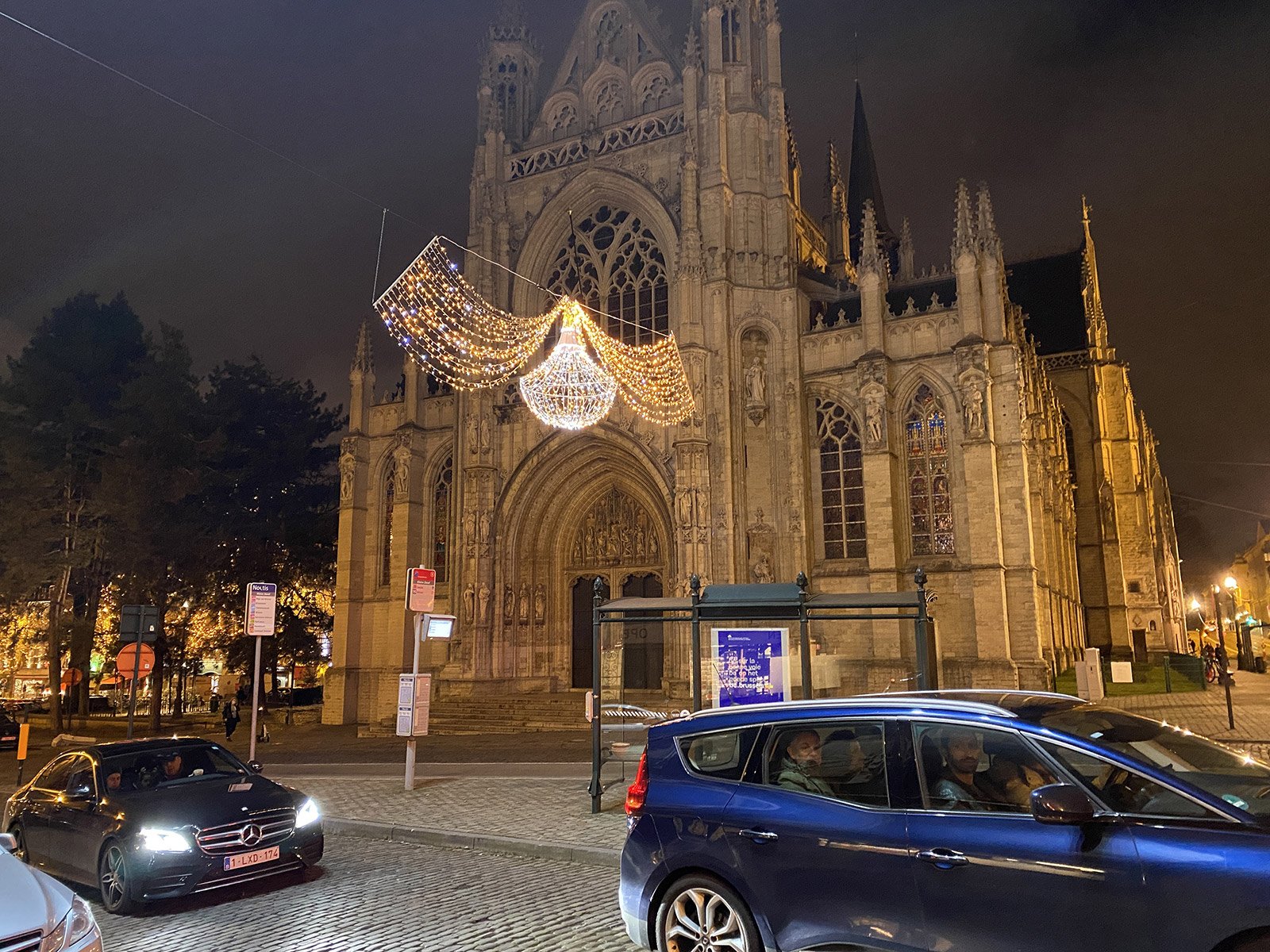
3D Light Display in Brussels © Pact Solutions
Making the Right Technical Choices for Your Project
A well-prepared festive lighting project combines suitable equipment, reliable technical information and a clear understanding of local requirements.
At Leblanc illuminations, creative design and technical know-how come together to develop lighting decorations adapted to each project's setting and objectives.
FAQ: Safety and Standards for Professional Lighting
Does the CE marking guarantee that a lighting installation is compliant?
No. The CE marking indicates that the manufacturer declares its equipment to be in compliance with applicable European requirements. It does not, on its own, guarantee the compliance of the entire installation. Compliance also depends on installation conditions and local regulations.
How can you tell if a lighting design is suitable for outdoor installation?
A professional selection process benefits from compiling visuals of the proposed solutions, product references, and available technical information. These elements facilitate communication with the client and allow for comparing multiple proposals before finalizing a choice.
Where can I view the Leblanc Illuminations collections?
You should consult the product’s technical data sheet and user manual. The IP rating, electrical specifications, and operating conditions specified by the manufacturer allow you to assess the product’s suitability for the intended environment.
Do the same electrical standards apply in every country?
No. Requirements may vary depending on national regulations, equipment specifications, and installation conditions. For an international project, it is important to verify the applicable rules in the destination country.
Planning a festive lighting project?
Share your ideas and site requirements with our team. We can help you explore lighting solutions suited to your space and project ambitions.